English| EUR
Suggested for you
More currencies
Choose a language
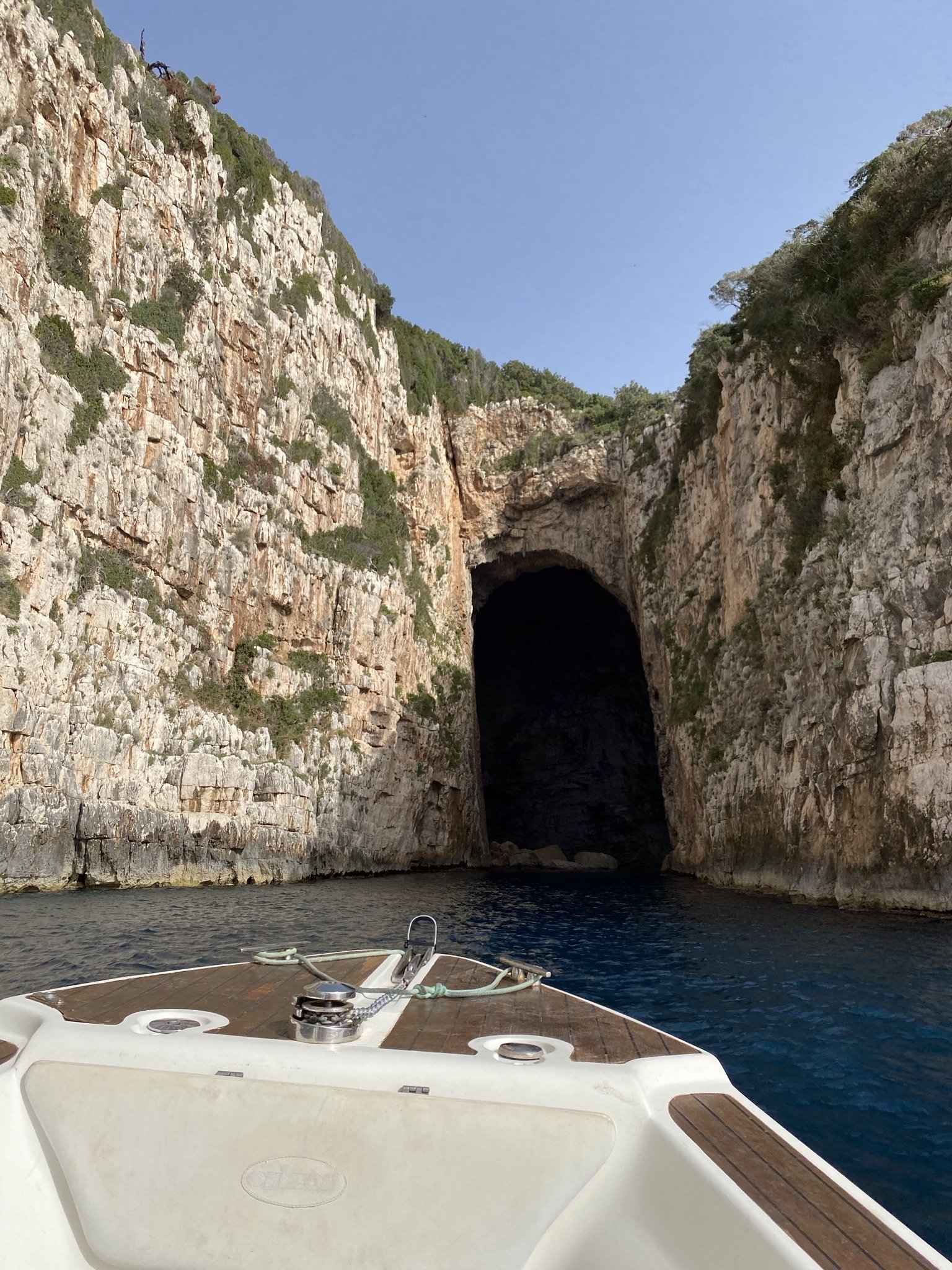
The Blue Cave sits 20 kilometers north of Vlorë, carved into the Karaburun Peninsula's western cliffs where the Adriatic meets the Ionian. No road reaches it — access is by private boat charter only, departing from Vlorë harbor daily between April and October.
Quick answer
The vlore boat trip blue cave runs daily from 09:00 to 17:00 throughout the year, though most operators sail April through October when the Adriatic is calmest. Marine-park waters are free to enter; you pay only the boat charter, which includes the captain, fuel and snorkeling gear. Departures between 09:00 and 11:00 guarantee calm seas and the horizontal morning light that illuminates the cave's interior turquoise glow.
The Karaburun-Sazan Marine Park holds the largest marine protected area in Albania, and the Blue Cave remains its signature landmark — a sea-level grotto 15 meters deep where sunlight refracts through shallow turquoise water and paints the limestone ceiling cyan. The cave formed over millennia as wave action carved the soluble Mesozoic bedrock, leaving a cathedral-like chamber accessible only when the Adriatic swell drops below half a meter. Most Vlorë boat operators anchor 30 meters offshore and let passengers swim in, though smaller inflatables can nose directly into the mouth when conditions allow. The water inside stays 18–22 degrees Celsius year-round, clear enough to see the white sand bottom three meters down. Tour durations range from three to six hours depending on whether the route includes Haxhi Ali Cave, Dafina Bay or the abandoned submarine tunnels on Sazan Island — operators at the harbor quote the full itinerary and fuel cost before departure. The vlore boat trip blue cave requires no permit or advance reservation; walk-up charters leave hourly during summer mornings, though May and September offer smaller crowds and identical water clarity. Private charters cost less per person when split among six to eight travelers, and captains adjust departure time to catch the optimal tide and light angle. Afternoon wind picks up after 14:00, turning the crossing choppy and obscuring the cave's turquoise refraction with surface ripples. Karaburun Peninsula is a designated nature reserve — removing shells, coral or archaeological fragments carries a 5,000 euro fine enforced by coast-guard patrol. Operators supply life vests and snorkeling masks, but underwater cameras and reef-safe sunscreen remain the visitor's responsibility. The marine park enforces no formal closing season; winter charters run when weather allows, though December through February averages three navigable days per week. Most travelers pair the cave with a stop at the Sazan military ruins or a swim at Gjiri i Akuariumit, the aquarium bay named for its nursery population of juvenile grouper and damselfish.
“The cave formed over millennia as wave action carved the soluble Mesozoic bedrock, leaving a cathedral-like chamber accessible only when the Adriatic swell drops below half a meter.”
The best arrival window is 09:00–11:00, which provides calm seas and the necessary light angles for clear visibility inside the Blue Cave. Planning your visit within this timeframe ensures the most stable maritime conditions on the Karaburun Peninsula.
Warm, 25°C–30°C. Frequent summer sunshine.
Peak season offers consistent warmth but higher visitor numbers at cave entrances.
Mild, 20°C–25°C. Lower wind probability.
Ideal conditions for those seeking quieter waters and reduced excursion traffic.
—
Early weekday departures minimize boat congestion, allowing for clearer access to the caves.
Verdict: The best time to visit is mid-week between 09:00 and 11:00 during the months of September or October.
Access to the Karaburun-Sazan Marine Park waters is provided at no cost. Travelers encounter financial obligations only when securing passage through private boat tour operators.
A full-day marine excursion to the Blue Cave requires advance booking, sun protection, and hydration essentials.
Everything you need to know about vlore boat trip blue cave
You must secure a spot through a local tour provider, as the blue cave is not accessible by public transport or individual hiking. These boat trips are the standard way to visit this protected Albanian marine site.
Visitors should pack sun protection, appropriate swimwear, and hydration for their time on the water. Given the rugged nature of the Karaburun Peninsula, wearing sturdy footwear for boarding and disembarking is also recommended.